Office clearance in Hendon

Our office clearance in Hendon is set up for businesses that need a tidy, organised way to remove unwanted items from commercial premises. Whether you are reworking a suite, consolidating desks or emptying a floor that has reached the end of its use, we handle the practical removal side with care and attention. The aim is to leave your space ready for its next stage without making the process more complicated than it needs to be.
We deal with mixed office contents, from single pieces of furniture to fuller clearance loads, and we can separate reusable items from material that needs to be taken away for disposal. Typical work can include desks, chairs, storage units, filing items, screens and general workplace clutter. For businesses that are planning a move or a refit, a clear and well-managed clearance can make the remaining steps easier to coordinate.
If you need a straightforward quotation, send us the details and we will look at the scope carefully. If you are comparing options, a brief outline of what stays, what goes and any access restrictions helps us keep the discussion focused. For many customers, a clear plan is the best starting point, before anything is scheduled.
Commercial clearance for offices and workspaces
Office environments rarely contain only one kind of item, so a useful clearance service needs to be flexible. Some projects involve old desks and chairs from a single department, while others involve mixed furniture, archive material and general contents from several rooms. Our work is centred on removing the items you no longer need and helping you manage the space in a sensible order, rather than forcing everything into one fixed approach.
We can work around the practical layout of the premises, including reception areas, meeting rooms, storage corners and open-plan workspaces. Where furniture needs to be dismantled before it can be moved, we can handle the process as part of the job. This is often helpful in offices where access is tight, corridors are narrow or items have been assembled in place. Clearances are usually smoother when the removal plan reflects the building, not just the contents.
For spaces with a lot of mixed material, it helps to think about the work in stages. What should leave first? What needs to be kept for reuse? Which areas can be cleared without interrupting the rest of the operation? These simple questions make it easier to shape a quotation and reduce unnecessary handling. If you are unsure, a short discussion is usually enough to establish the most practical route.
Furniture and equipment removal
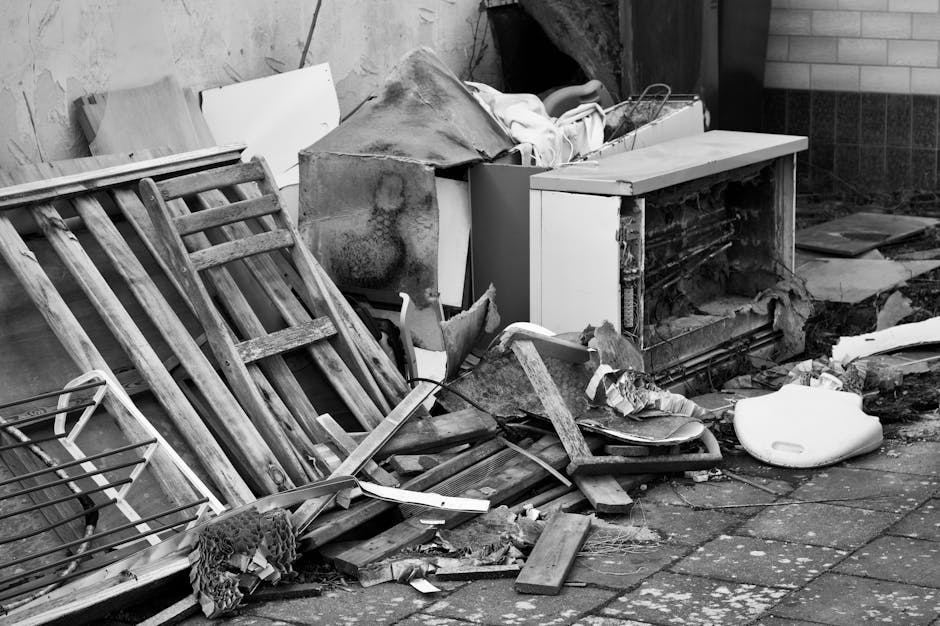
Office clearances often begin with furniture removal because bulky items take up the most room and shape the rest of the job. Desks, storage cabinets, shelving, filing units and seating can all be removed as part of the same service when they are no longer needed. We also handle the everyday practicalities that come with lifting and moving heavier pieces, which is especially useful in spaces that still need to remain navigable during the work.
If an office contains items that are still serviceable, it may be sensible to separate them before the main removal begins. Doing that can help you keep useful furniture in circulation while clearing out what is outdated, damaged or surplus to requirements. We do not assume every item belongs in the same category; instead, we treat each clearance as a mix of potential reuse, recycling and disposal depending on what is present on site.
Many customers also ask about computer desks, office chairs and storage that have built up over time. These jobs can be easier when the items are grouped by room or function, especially if some pieces are staying and others are being taken away. A simple list is often enough to start the conversation, and it can make the quotation stage more precise without creating unnecessary admin.
Clearance for moves, refurbishments and end-of-lease handovers
Office clearance is often tied to a change in how a business uses its premises. A move may leave behind surplus furniture and file storage, while a refurbishment may require existing contents to be cleared before contractors can begin. In lease-end situations, the aim is usually to empty the space in an orderly way so that the property can be handed over in a cleaner condition. Each of these situations needs a slightly different emphasis, even when the underlying removal work looks similar.
For planned changes, timing matters because the clearance sometimes has to sit alongside other trades or building work. That may mean clearing one area first, then following on with the rest once access opens up. It can also mean separating items that must be retained for internal records from items that can go immediately. A well-timed clearance helps reduce bottlenecks, particularly where multiple people are involved in the same move or refit.
The most useful enquiries usually include the type of premises, the approximate volume of items and any known restrictions such as stairs, parking limits or limited lift access. A concise description is better than a long one, as it keeps the discussion practical and avoids confusion. If you are preparing a quotation request, focus on the main categories first and add detail only where it affects the work.
Sorting, reuse and disposal
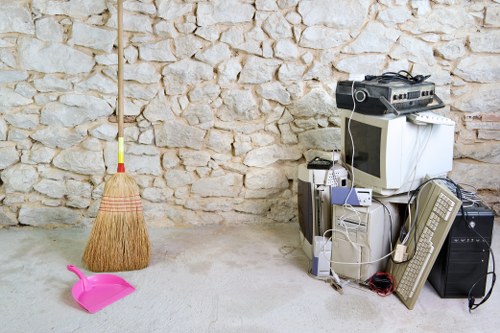
A careful office clearance should not treat every item the same way. Some contents may be suitable for reuse, some may be best broken down for material recovery and some will need straightforward disposal. We work through these categories in a way that suits the job rather than assuming a single route. That is particularly important in offices where furniture, packaging, paper records and mixed equipment may all be present together.
This approach gives customers a more controlled outcome because it helps separate the items that still have value from those that no longer do. It is often worthwhile to identify reusable furniture early, especially if you want to keep part of the office operational while removing the rest. We can then focus the clearance on the sections that need attention, rather than disrupting areas that are still in use.
Responsible handling is also easier when the removal plan is straightforward. For many offices, the main decision is not whether the clearance can be done, but how the material should be divided. A clear route for each category makes the process more efficient and helps avoid unnecessary double handling. If you are looking for a no-fuss quotation, it helps to mention whether the items are all in one room or spread across several spaces.
What a typical office clearance can include
Office environments vary widely, so the exact scope of a clearance can differ from one job to the next. Some customers need a small set of items removed from a single room, while others want several connected spaces cleared in one visit. Common items may include desks, chairs, cabinets, shelving, reception furniture, meeting-room pieces and general surplus contents. When the work is planned properly, these categories can be managed in a structured sequence.
Where an office contains both working areas and storage areas, it is often useful to remove the items that are easiest to identify first. That may mean taking away obvious surplus furniture before moving on to smaller or more awkward contents. The work can also be adapted around the need to keep essential areas accessible, which matters when other staff are still on site or when the premises are being used in stages.
To help with planning, it can be useful to think in terms of categories rather than individual pieces. Furniture, loose contents and stored items may all need different handling, and separating them at the enquiry stage makes the next step easier. If you are requesting a quotation, a few photographs or a brief room-by-room summary can be helpful, but a short written description is often enough to begin.
- Single-room or multi-room office clearances
- Removal of desks, chairs and storage furniture
- Clearance of mixed workplace contents and surplus items
- Preparation for a move, refurbishment or handover
Planning access and keeping the job efficient
Most office clearances are easier when access is thought through before the work starts. Buildings may have shared entrances, lifts, stairwells or loading arrangements that affect the best order of removal. If large pieces need to pass through narrow routes, the clearance may benefit from earlier dismantling or from removing smaller items first to create space. This kind of planning does not need to be complicated, but it does need to be realistic.
It also helps to know whether the premises will be occupied during the job. In a live office, some items may need to remain untouched while others can be taken away immediately, so the work often has to be staged around staff movements and existing equipment. That is one reason a simple description of the layout can be more valuable than a long list of contents. It gives a clearer picture of how the removal should be approached.
If you are arranging a quotation, the most useful details are usually access, volume and priority items. You do not need to write a full inventory unless that is convenient. What matters is whether there are any practical limits that may affect lifting, loading or timing. A short, accurate summary keeps the process efficient and avoids assumptions.
About Hendon
![A collection of several large black plastic rubbish bags, tightly sealed and piled together on a grassy area near a stone wall. The bags appear to contain waste materials, and they are slightly reflective due to the plastic finish. The green grass beneath the bags has scattered leaves and small stones, indicating an outdoor setting, possibly a driveway or garden area in Hendon. The stone wall in the background is composed of irregularly shaped rocks with moss or dirt accumulation, providing a natural and textured backdrop. The scene is well-lit with natural daylight, emphasizing the contrast between the dark bags and the lighter environment, illustrating typical rubbish removal and clearance activities that [COMPANY_NAME], such as Office Clearance Hendon, handle in the local area as part of their rubbish collection services.](/pub/_photos/rubbish/f1344684032.jpg)
Hendon is a district in the London Borough of Barnet, in north-west London, with a long history shaped by transport, suburban growth and changing patterns of settlement. The area is closely associated with the former Hendon Aerodrome, a site that played an important role in early aviation before its closure and redevelopment. Today, parts of that history are still remembered in the local street pattern and in nearby institutions linked to flight and engineering. Hendon also includes residential streets, commercial premises and green spaces that reflect its gradual transition from older village roots to a more urban setting. The area sits within easy reach of neighbouring districts such as Golders Green, Colindale and Finchley, yet it retains its own identity through landmarks, local amenities and community life. Hendon Central and Brent Cross are well-known transport and retail reference points, while the wider district includes a mix of older housing, modern development and institutional buildings. One of the area’s most prominent landmarks is the Royal Air Force Museum London, which preserves the aviation connection that has helped define Hendon’s modern reputation. The nearby Welsh Harp reservoir and open spaces in the borough add a contrasting natural edge to the built environment, giving the district a combination of urban convenience and accessible recreation. Hendon’s architecture is similarly varied, with interwar housing, later redevelopment and surviving older structures contributing to a layered streetscape. This mixture of history, transport links and local character makes the district an established part of north-west London rather than a place defined by a single use or period.
Getting office contents ready for removal
Preparing for an office clearance is mostly about making the day of the work clearer, not about doing the job for us. It helps if items that are definitely staying are separated from items that are going, particularly where furniture or storage units are shared across teams. If there are small items in drawers or cupboards, it is worth deciding in advance whether they should be emptied first or included as part of the clearance. That kind of decision can save time later and reduce confusion on site.
Some offices also benefit from a short internal check before the clearance begins. That might involve identifying anything sensitive, anything that should be retained for records and anything that needs to be treated separately from ordinary furniture. The more clearly these items are marked out, the more efficiently the rest of the work can proceed. It is not about making the process formal; it is about avoiding unnecessary uncertainty when the removal starts.
For customers looking to request a quotation, the best approach is to keep the initial note practical. Say what type of office it is, what needs to go and whether the items are grouped together or spread out. If you already know the time frame, include that too. Even a concise message can provide enough information to start the conversation in a useful way.
Pricing factors and quotation details

The cost of an office clearance is usually shaped by the amount and type of material involved, the ease of access and how much separation or dismantling is needed before removal. A small room with a few items will naturally differ from a larger clearance with mixed furniture, storage and contents spread across several areas. Because of that, a quotation is most accurate when it is based on the actual scope rather than a general estimate made without enough detail.
Other factors can include whether items are located on different floors, whether parking or loading access is straightforward and whether the job has to be completed in a particular sequence. If some items are staying and others are going, that can also affect how the clearance is planned. The aim is not to create extra complexity, but to make sure the pricing reflects the work that is actually required.
If you would like us to price the job, use the final enquiry step to give a clear summary and we will take it from there. Simple, accurate details are usually enough to begin a sensible conversation about the work. You can also look through our pricing and quotes page for more context before sending your request.
Supporting business moves and office changes
Office clearance is often one part of a wider change, such as a relocation, downsizing exercise or internal reorganisation. In those situations, the most helpful clearance service is one that can fit around the overall plan rather than competing with it. That may involve clearing one department ahead of another, working alongside movers or removing furniture in a sequence that matches the next stage of the project.
Where an office is being redesigned, there can be a useful distinction between what is no longer needed and what should stay in place for the new layout. That distinction is easier to manage when the clearance is handled with a clear brief. We can work from a list, a short walk-through description or photographs if they help, but the main point is to keep the process controlled and practical for the business involved.
For related services, you may also want to review our business waste removal page, especially if your project includes loose workplace waste as well as larger items. If the task includes all contents from a room or suite, our office clearance service page gives further detail on the main type of work. When you are ready, send the office details and ask for a quotation.